SCREWS INTRODUCTION

Screws have greater holding power than nails and can be
removed when desired; in other words, you can disassemble the job at will.
There are four things to consider when selecting a screw for
the job: finish, length, gauge, and head.
Screws can be plain steel, blued, or dipped -- the latter two types are partially resistant to moisture -- galvanized, brass, or chrome-plated. Screws range in length up to about 4 inches.
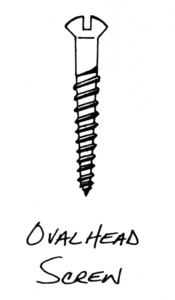
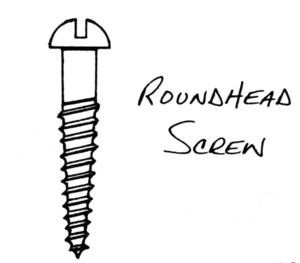
Screws are also classified according to the diameter or gauge, commonly ranging from No.5 to No. 14, though larger sizes are available. The gauge refers to the diameter under the head. If the screw is a type that tapers, the diameter is smaller at its tip than nearer its head. Screws of the same gauge are available in different lengths.
Screws are designed to operate best in certain materials, though there are some that have multiple uses.
If you have many screws to drive in wood, or a few large ones, drilling pilot holes is the first thing you should do. Special profiled bits are available for drilling slightly smaller diameter holes than the tapering screw diameters and makes them much easier to drive.
If you have many screws to drive, or large screws, use some sort of power tool, such as a cordless screwdriver. This, too, will make the job much easier.
Description of Contents
 IntroductionBracesCabinet Door PartsCastersChain And AccessoriesClampsCloset Door PartsDoor LocksDoorstopsDrapery PartsDrawer PartsFraming FastenersGarage Door PartsGutterHandlesHaspsHingesMetalsNailsNuts And BoltsPlant HangersRivetsRope, Cord And AccessoriesScreeningScrew Eyes And HooksScrewsShelf SupportsSpringsStorm & Screen Door PartsWall FastenersWeather StrippingWindow PartsWireWire FencingMiscellaneous
OTHER HARDWARE SECTIONS
ELECTRICALPLUMBINGADHESIVES, PATCHES & MORESAFETY